
Digital Marketing
Digital Marketing in Scotland 2026: A Practical Growth Guide
Most marketing plans fail on arithmetic rather than creativity. This guide sets out how Scottish businesses should choose channels, build the systems behind them, and measure the only number that matters — profitable enquiries.

Contents
Digital marketing in Scotland is not a different discipline from digital marketing anywhere else, but the constraints are distinctive: smaller local markets, strong word-of-mouth networks, sectors that cluster regionally, and teams that are usually too small to run every channel at once. That makes sequencing more important than breadth.
01
The 2026 landscape
Three changes shape how budgets should be spent this year. Search results present more answers directly, so informational traffic converts less and commercial intent matters more. Paid auctions have become more automated and less manually tunable, which shifts advantage to whoever supplies the best conversion data. And privacy changes have made attribution fuzzier, so decisions increasingly rest on modelled and self-reported data rather than clean click paths.
- Owned assets — your website, your list, your CRM data — have appreciated relative to rented reach.
- Creative and offer quality now matter more than campaign micro-management on most paid platforms.
- Speed of follow-up is one of the highest-leverage variables in lead generation, and one of the cheapest to fix.
- Brand searches are the most durable asset a small business can build.
02
Strategy before channels
Short answer
A marketing strategy is a set of decisions about who you serve, what you offer them, why they should choose you, and how they will find out. Channels are the last decision, not the first — picking channels first is why so many plans produce activity without pipeline.
- 01Define the buyerWho actually signs off, what triggers the search, what they fear getting wrong.
- 02Define the offerThe specific outcome you sell, with a clear scope and price logic.
- 03Define the proofCase studies, examples, guarantees and evidence a sceptic would accept.
- 04Define the mathsWhat a lead is worth, what you can afford to pay for one.
- 05Then choose channelsOnly the ones that reach that buyer at a price the maths supports.
03
Unit economics: the numbers that decide everything
| Metric | How to get it | Why it matters |
|---|---|---|
| Average order or contract value | Last 12 months of sales | Sets the ceiling on acquisition cost |
| Gross margin | Revenue minus delivery cost | Marketing is paid from margin, not revenue |
| Lead-to-customer rate | CRM or sales records | Turns cost per lead into cost per customer |
| Customer lifetime value | Repeat rate x margin x lifespan | Justifies higher acquisition spend |
| Max cost per acquisition | Margin x acceptable payback share | The number every channel is judged against |
If you don't know what a customer is worth, every channel looks either too expensive or suspiciously cheap — and you cannot tell which.
04
Choosing a channel mix
| Channel | Best for | Speed | Main risk |
|---|---|---|---|
| Organic search | Durable demand capture | Slow to start, compounding | Under-resourcing then abandoning it |
| Google Ads | Immediate high-intent demand | Immediate | Paying for brand and irrelevant terms |
| Paid social | Demand creation, visual products | Fast | Creative fatigue and weak measurement |
| Content and thought leadership | Trust, authority, sales support | Slow | Publishing without a distribution plan |
| Nurture, repeat, reactivation | Immediate on an existing list | Sending frequency without value | |
| Referral and partnerships | High-quality B2B leads | Variable | No system, so it stays accidental |
| Local and offline | Community-driven trade | Variable | Untracked, so it gets cut first |
For most Scottish SMEs the honest answer is two channels done properly plus a strong website — not six channels done badly. Capture existing demand first (search), then create demand once capture is saturated.
05
The website is the engine, not a brochure
Every channel spends its money at the same destination. A 1% improvement in the site's conversion rate improves the return of every campaign simultaneously, which is why site quality is usually the highest-leverage investment available.
What a revenue-generating site needs
- A clear statement of what you do and who for, above the fold
- Service pages with genuine depth, pricing logic and process
- Proof: case studies, examples, named results you can substantiate
- Fast mobile performance
- Multiple contact routes, including one that takes under a minute
- Tracking that records enquiries as conversion events
- Content that answers pre-sales questions honestly
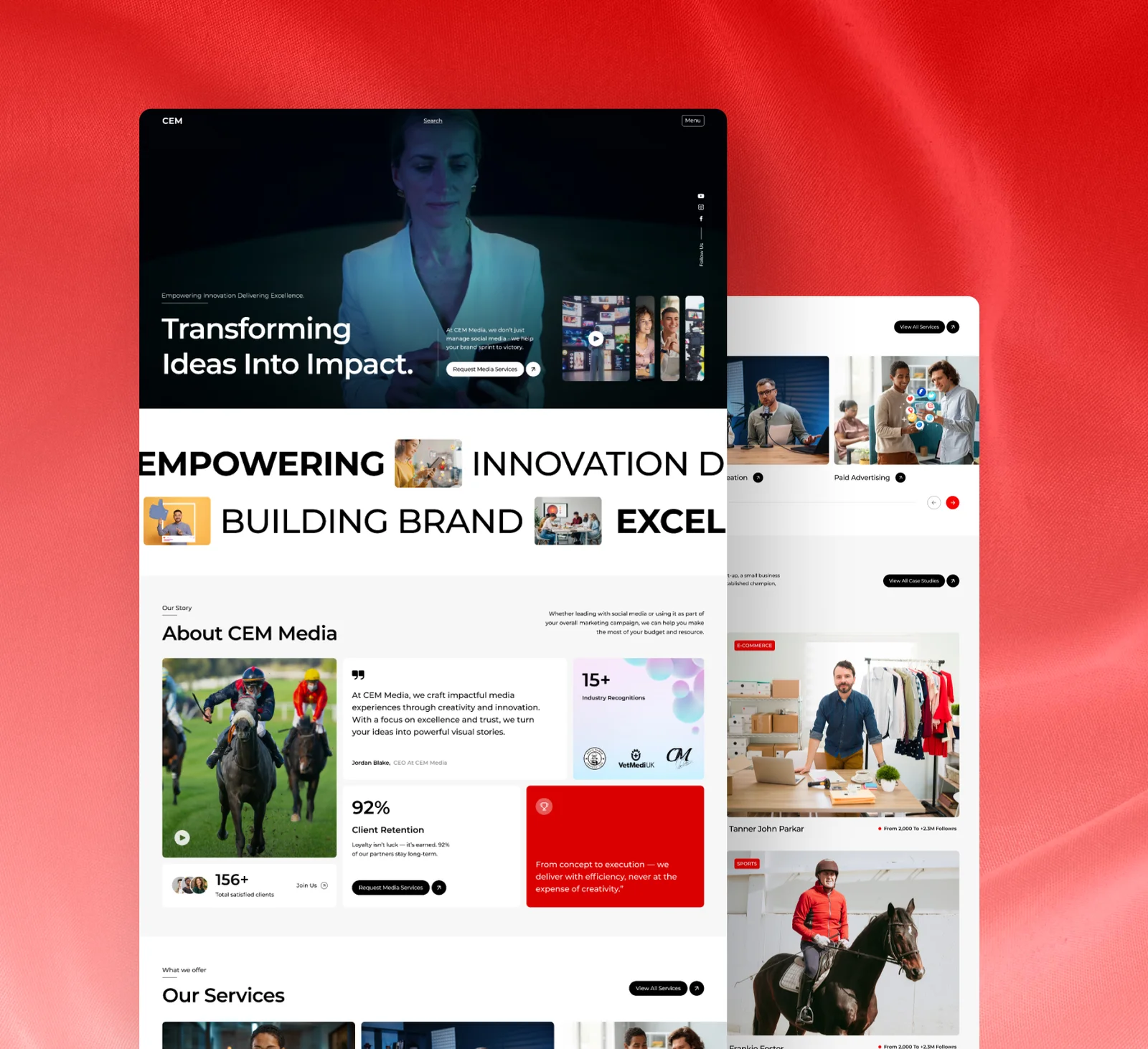
If the site itself is the constraint, that's a build problem before it's a marketing problem — see the web design guide.
06
Organic search: the compounding channel
SEO is the only channel where the cost per lead tends to fall over time. It is also the slowest to establish, which is why it should be started early and judged over quarters rather than weeks.
- Fix technical and indexing problems before producing content — otherwise you are publishing into a broken system.
- Prioritise commercial and local intent pages ahead of top-of-funnel blogging.
- Build a small number of genuinely strong location pages rather than templated ones.
- Use case studies as authority assets; they convert and attract links simultaneously.
- Measure non-brand organic enquiries, not total sessions.
The full method is in the SEO Glasgow guide.
07
Paid search: buying the demand that already exists
Where budgets leak
- Broad match without a disciplined negative keyword list.
- Sending every click to the homepage instead of a matched landing page.
- Optimising to form fills that the sales team never qualifies.
- Bidding heavily on your own brand when organic already owns it, without testing incrementality.
- Letting automation optimise against a conversion definition that includes junk.
What good looks like
- Tight campaign structure aligned to service and intent.
- Landing pages that continue the promise made in the ad.
- Conversion values passed back so bidding optimises to revenue, not volume.
- Offline conversion import where sales close later, so the platform learns from real outcomes.
- Weekly search-term review in the first months, then monthly.
09
Content and thought leadership
Content earns its budget in two ways: attracting people who are researching, and shortening sales conversations with people who already found you. The second is systematically undervalued.
| Content type | Job it does |
|---|---|
| Pillar guides | Authority, organic capture, sales reference |
| Case studies | Proof, objection handling, links |
| Pricing and process pages | Qualification and trust |
| Comparison pages | Winning commercial-investigation searches |
| FAQs from real calls | Removing friction before contact |
10
Email and lifecycle marketing
- Capture consent properly and give a genuine reason to subscribe.
- Send when you have something useful; cadence without value trains people to ignore you.
- Segment by stage — enquired, quoted, bought, dormant — and write differently to each.
- Automate the obvious: enquiry acknowledgement, quote follow-up, post-project check-in, reactivation.
- Measure replies and enquiries, not just opens, which are unreliable.
11
Conversion rate optimisation
CRO is not button colours. It is the removal of friction and doubt at the points where people currently stop.
- 01Find the drop-offAnalytics funnels, form analytics, session recordings, sales feedback.
- 02Form a hypothesisWhy do people hesitate here — cost, trust, clarity, effort?
- 03Change one thingCopy, layout, field count, proof placement, offer.
- 04Measure enquiriesNot micro-interactions; the number that pays wages.
- 05Keep or revertAnd record what you learned so it isn't retested next year.
- Cut form fields to what you genuinely need to respond.
- Put proof next to the decision point, not on a separate page.
- State pricing logic even if you cannot state prices.
- Make the low-commitment option visible: a question, a callback, a short audit.
12
Lead capture systems
- Every submission should be stored, not just emailed — email is a fragile system of record.
- Notify by more than one route so no lead depends on a single inbox rule.
- Capture source and campaign data with the enquiry so attribution survives.
- Send an immediate acknowledgement setting expectations for response time.
- Log validation errors: forms fail silently more often than people believe.
13
CRM and follow-up speed
The gap between enquiry and first human response is one of the strongest predictors of conversion. For most SMEs, halving that gap is cheaper and more effective than increasing ad spend.
- One system where every lead lives, with an owner and a next action.
- Defined response-time targets, and visibility when they slip.
- A structured follow-up sequence rather than a single attempt.
- Reasons recorded for lost deals, feeding back into targeting and content.
Where off-the-shelf tools don't fit the process, a custom system often costs less than the workarounds it replaces.
14
Workflow automation that pays for itself
| Manual task | Automated version | Effect |
|---|---|---|
| Copying leads into a spreadsheet | Automatic sync from the form | No lost leads, no rekeying |
| Chasing quotes by memory | Scheduled follow-up sequence | Higher close rate |
| Monthly report assembly | Live dashboard | Decisions made weekly, not monthly |
| Manual onboarding emails | Triggered lifecycle messages | Consistent client experience |
15
B2B vs B2C in the Scottish market
| B2B | B2C | |
|---|---|---|
| Cycle length | Weeks to months, multiple stakeholders | Hours to days |
| Priority channels | Search, referral, content, LinkedIn | Search, paid social, local, reviews |
| Key asset | Case studies and process clarity | Reviews, imagery, speed of purchase |
| Measurement | Pipeline and closed revenue | Immediate conversion tracking |
| Common failure | Judging long cycles on 30-day data | Ignoring lifetime value and repeat |
16
Local marketing in Glasgow, Edinburgh and beyond
- Google Business Profile is the highest-return local asset; keep it complete and reviewed.
- Build a review habit into delivery rather than requesting sporadically.
- Local partnerships and sponsorships produce both referrals and genuine links.
- Regional relevance in content works when it is real: local projects, sectors and constraints.
- Edinburgh and Glasgow behave as distinct markets; don't assume one page serves both.
17
Allocating budget sensibly
Rather than percentage rules borrowed from enterprise marketing, allocate against the constraint. If the site converts poorly, spend there. If there is no demand capture, spend on search. If demand is captured and you need more of it, spend on creation.
| Situation | Where the next pound should go |
|---|---|
| Traffic arrives but doesn't enquire | Website, messaging, CRO |
| Nobody finds you for commercial terms | SEO foundations and service pages |
| Need leads this month | Paid search on high-intent terms |
| Leads arrive but don't close | Follow-up systems, qualification, sales enablement content |
| Everything works, need scale | Demand creation: paid social, content, PR |
18
Measurement and attribution
- Define conversions as qualified enquiries, and record them server-side where possible.
- Accept that attribution is directional, not forensic; use it to allocate, not to litigate.
- Add a 'how did you hear about us?' field — self-reported data catches what tracking misses.
- Review by cohort over months for long sales cycles.
- Report on the same small set of numbers consistently so trends are visible.
19
Privacy, consent and UK GDPR
- Obtain consent for non-essential cookies and honour the choice in the tags you fire.
- Explain in the privacy notice what you collect at enquiry and why.
- Keep marketing consent separate from service communication.
- Store lead data securely with access limited to those who need it.
- Provide a working unsubscribe route and act on requests promptly.
20
AI in marketing operations
AI is most valuable in the unglamorous middle of the process: summarising research, drafting variations, cleaning data, classifying enquiries and preparing reports. It is least valuable when asked to produce publishable expertise it does not have.
- Use it to accelerate work a knowledgeable person then edits.
- Never publish factual claims it produced without verification.
- Automate classification and routing of enquiries — a genuinely reliable use.
- Keep a human accountable for anything that reaches a customer.
21
In-house, agency, freelancer or hybrid
| Model | Works when | Watch for |
|---|---|---|
| In-house generalist | Steady ongoing execution is needed | Skill gaps in technical and paid specialisms |
| Agency | Multiple channels at volume | Junior delivery behind senior sales |
| Independent specialist | A specific constraint needs solving well | Capacity limits |
| Hybrid | In-house owns execution, specialist owns direction | Unclear ownership if not documented |
22
A realistic 90-day plan
- 01Days 1–15Establish the numbers: value of a customer, current lead volume, conversion rates. Fix tracking.
- 02Days 16–30Audit the website and search visibility. Fix technical blockers and the worst conversion friction.
- 03Days 31–45Rebuild the primary service and location pages. Set up lead capture properly, with storage and notifications.
- 04Days 46–60Launch high-intent paid search with matched landing pages, if immediate volume is needed.
- 05Days 61–75Publish the first authority assets: a pillar guide and one or two real case studies.
- 06Days 76–90Tighten follow-up: response times, sequences, CRM hygiene. Review the numbers and reallocate.
23
Common mistakes
- Running channels before the website can convert.
- Judging SEO on a 30-day window and paid on a lifetime window.
- Reporting traffic instead of enquiries.
- Spreading a small budget across five channels.
- Producing content with no distribution or internal linking plan.
- Letting enquiries sit for days and blaming lead quality.
- Rebuilding the website without a redirect plan and losing existing visibility.
- Changing strategy every quarter, so nothing compounds.
24
Frequently asked questions
How much should a Scottish SME spend on digital marketing?
Work backwards from unit economics rather than a percentage rule: what a customer is worth, what share of that margin you can spend to acquire one, and how many you need. That produces a defensible budget; industry averages don't.
Should I start with SEO or Google Ads?
If you need leads immediately, paid search on high-intent terms. If you can invest for compounding returns, SEO. Most businesses eventually run both, using paid data to inform which organic pages to build.
How long before digital marketing shows results?
Paid search can produce enquiries within days. SEO usually takes several months to move commercial terms. Website and conversion improvements often show fastest, because they affect traffic you already have.
Is social media worth it for a B2B business in Scotland?
As a credibility surface, yes. As a primary acquisition channel it works mainly on LinkedIn with precise targeting and a genuinely useful offer; otherwise the cost per qualified lead is usually high.
How do I track marketing when attribution is unreliable?
Combine platform data, server-side conversion recording, CRM outcomes and a self-reported 'how did you hear about us' field. Use it to allocate budget directionally rather than to assign exact credit.
Do I need a new website before marketing?
Not always. Many sites need structural and conversion fixes rather than replacement. Rebuild when the platform genuinely prevents the pages, speed or tracking you need.
What is the single highest-leverage improvement for most businesses?
Responding to enquiries faster and following up consistently. It costs almost nothing and typically outperforms an equivalent increase in advertising spend.
Can one person run all of this?
Usually not well. A common working model is in-house ownership of day-to-day execution with a specialist directing technical SEO, website and measurement work.
Want a growth plan built around your numbers?
Shahroz combines website development, SEO and lead-generation systems so marketing spend lands somewhere that converts.
Working with businesses across Glasgow, Edinburgh, Scotland and the wider UK.
Continue reading
- SEOSEO Glasgow: Complete 2026 Guide →Technical SEO, local search, AI answers, costs and how to hire well.
- Web DesignWeb Design Glasgow: Complete 2026 Guide →What quality costs, and why cheap websites get rebuilt.
- DevelopmentWebsite Development Glasgow: 2026 Guide →The build side: platforms, performance, accessibility and ownership.
- ServiceCustom Software & CRM →When off-the-shelf tools stop fitting the process.
08
Paid social and organic social
Paid social creates demand rather than capturing it, so it works best where the product is visual, the offer is easy to grasp, or the audience is definable. In B2B, LinkedIn works when the targeting is precise and the offer is genuinely useful; it is expensive when used as a broadcast channel.