
Development
Website Development Glasgow: The Complete 2026 Guide to Building a Site Properly
Design decides what a website looks like. Development decides whether it is fast, secure, accessible, maintainable and actually yours. This is what happens between the mockup and the launch — and what it costs to do it well.
Contents
Most website problems that look like design problems are development problems. Slow pages, broken forms, pages that fail on a phone, a CMS nobody can use, a site the owner cannot move to another host — none of those are decided in a design tool.
This guide is the development counterpart to the web design Glasgow guide and the SEO Glasgow guide. If you are commissioning a website in Glasgow, Edinburgh or anywhere in Scotland, this is what to ask about, what to expect, and how to tell a solid build from one that will cost you again in eighteen months.
01
What website development actually covers
Short answer
Development is everything that turns an agreed design into a working, hosted, maintainable website: markup and styling, content management, forms and integrations, performance, accessibility, security, analytics and deployment.
- Front-end build — the HTML, CSS and JavaScript a visitor's browser runs.
- Content management — how you edit pages without calling a developer.
- Back-end and data — forms, enquiries, accounts, bookings, payments.
- Integrations — CRM, email, analytics, spreadsheets, third-party APIs.
- Infrastructure — hosting, domains, SSL, backups, deployment.
- Quality — performance budgets, accessibility, cross-browser testing, security.
02
Design vs development — and why the split matters
A designer can produce a beautiful page that is slow, inaccessible and impossible to edit. A developer can produce a fast, robust site that converts nobody. The projects that work treat them as one process with two disciplines, agreed at the same table.
| Question | Design owns | Development owns |
|---|---|---|
| Does it communicate? | Hierarchy, typography, imagery | Faithful implementation |
| Is it fast? | Image and motion restraint | Bundle size, caching, formats |
| Is it usable by everyone? | Contrast, target sizes, clarity | Semantics, focus, ARIA, keyboard |
| Can the client run it? | Content model | CMS fields, validation, docs |
| Will it rank? | Content structure | Markup, speed, crawlability, schema |
03
Choosing a platform
There is no universally correct platform — only a correct fit for how often the site changes, who changes it, and what it has to connect to.
| Platform | Best fit | Watch out for |
|---|---|---|
| WordPress | Content-heavy sites edited weekly by non-technical staff | Plugin bloat, update maintenance, security exposure |
| Shopify | Product retail with standard fulfilment | Monthly fees, theme limits, transaction costs |
| Headless / custom | Bespoke UX, apps, portals, complex integrations | Needs a developer relationship for larger changes |
| Page builders (Wix, Squarespace) | Very small brochure sites, tight budgets | Performance ceilings, limited SEO control, lock-in |
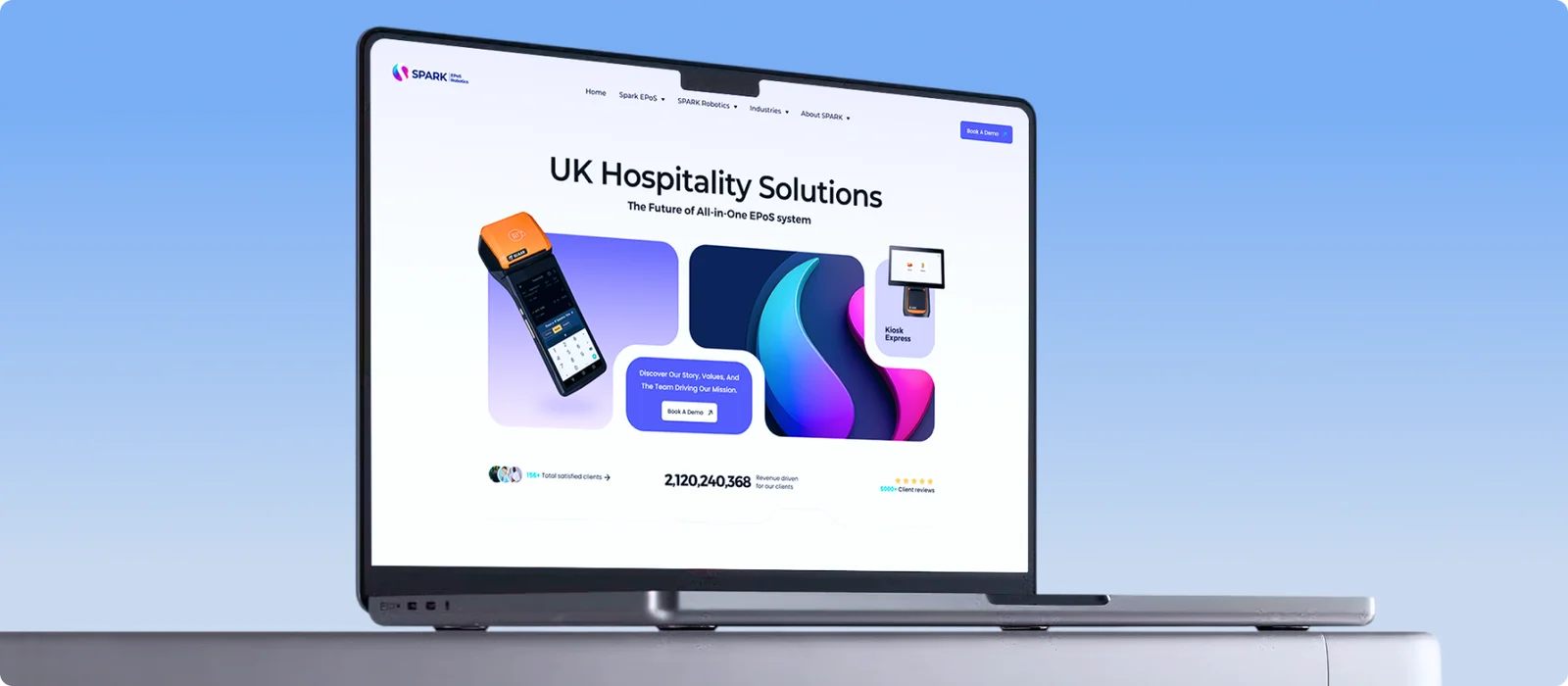
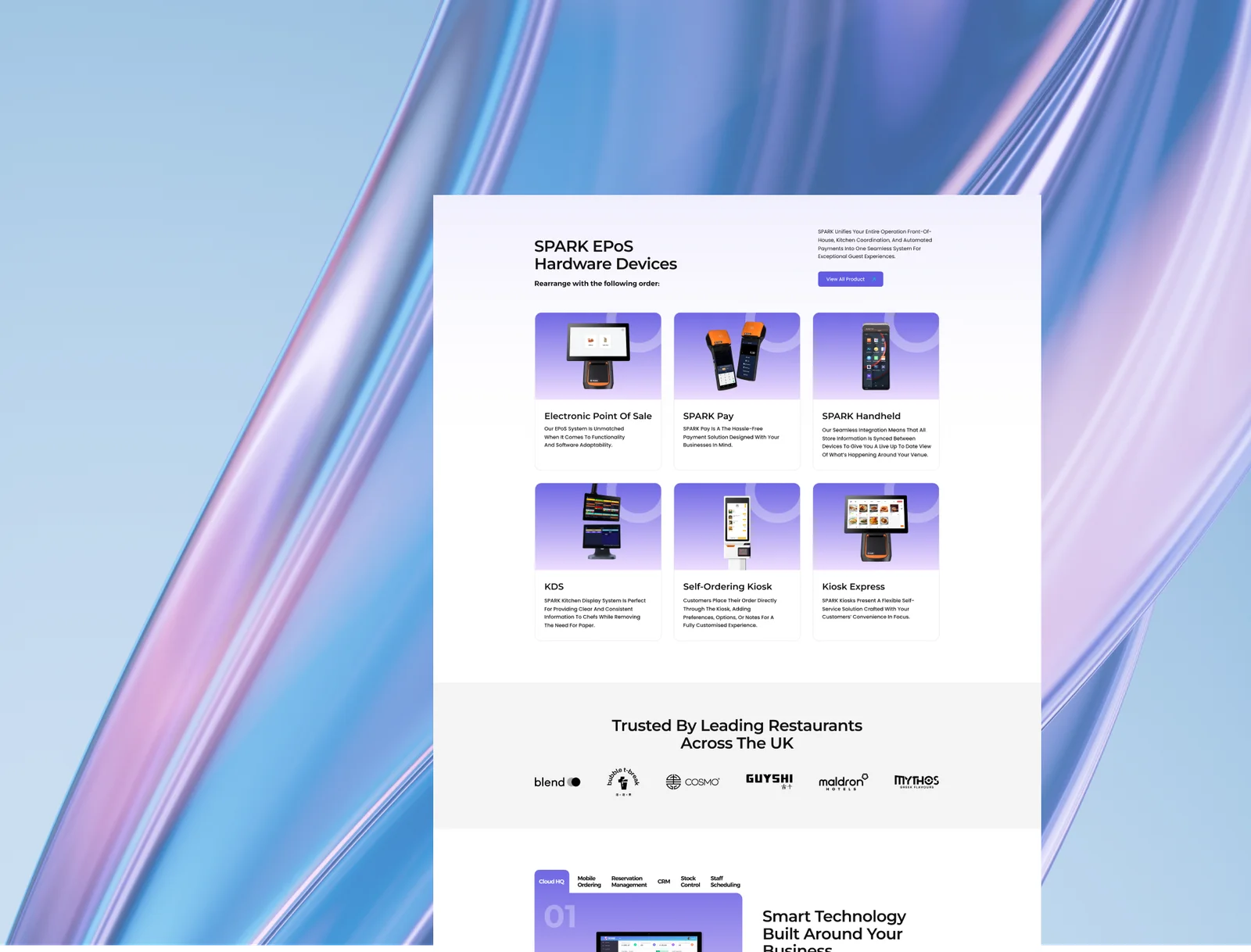
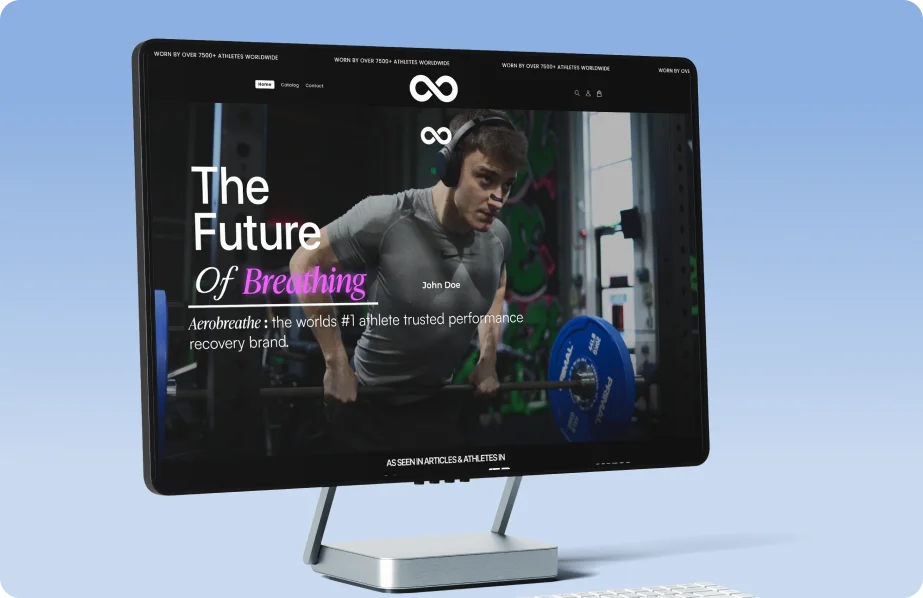
My own client work usually lands in the third row — bespoke builds such as Spark EPOS, Revest and Aerobreathe — because those projects needed control over performance, structure and interface detail that templates do not give.
04
WordPress vs a custom build
The honest version: WordPress is excellent when a team publishes often and needs a familiar editor. It becomes expensive when it is used as a substitute for design and engineering — twenty plugins, a bought theme, and a homepage that takes eight seconds on 4G.
The platform rarely fails. What fails is asking a general-purpose platform to do a specific job it was never shaped for.
Choose custom when
- Speed is a competitive advantage, not a nice-to-have
- The interface is part of the product experience
- You need integrations beyond a plugin's happy path
- You want no licence or plugin subscription stack
- Editors need a small, safe set of fields, not unlimited page building
- The site must scale into an app, portal or dashboard later
05
Ecommerce, bookings and payments
Selling online changes the risk profile: payments, tax, stock, refunds and delivery all become part of the build. Decide early whether you need a full store, a handful of products, or simply a payment link and a booking flow — the cost gap between those is enormous.
- 01Map the moneyProducts, variants, pricing rules, VAT, shipping zones, refunds.
- 02Pick the railsHosted checkout (Stripe, Shopify) unless there is a genuine reason to build one.
- 03Design the decisionProduct page, basket and checkout are the three pages that decide revenue.
- 04Instrument itTrack add-to-basket, checkout start and purchase before launch, not after.
06
How a build actually runs
The single biggest predictor of a project running late is content readiness. Copy, photography, product data and legal pages are almost always the bottleneck — not code.
07
Realistic timelines
| Project | Typical duration | Main variable |
|---|---|---|
| Small brochure site (4–6 pages) | 2–4 weeks | Content readiness |
| Business site with CMS (10–20 pages) | 4–8 weeks | Content plus review cycles |
| Ecommerce store | 6–12 weeks | Product data and fulfilment rules |
| Bespoke platform or portal | 10 weeks+ | Scope and integrations |
08
What website development costs in Glasgow
Prices in Scotland vary widely because the word "website" covers a leaflet and a software product. As a general guide, expect small brochure builds in the low thousands, business sites with a CMS in the mid thousands, and bespoke platforms to run well beyond that. My own current ranges are published on the pricing page.
What actually moves the number: page count, bespoke design versus template, integrations, content production, ecommerce complexity, and how much ongoing support you want after launch.
09
Performance and Core Web Vitals
Performance is a build decision made hundreds of times, not a plugin installed at the end. The three metrics Google reports — Largest Contentful Paint, Interaction to Next Paint and Cumulative Layout Shift — are all mostly determined by how the front end is assembled.
Performance work that actually moves the numbers
- Modern compressed image formats, sized and lazy-loaded below the fold
- A preloaded hero asset so the first paint is not waiting on JavaScript
- Minimal third-party scripts; each one audited for its cost
- System or self-hosted fonts rather than render-blocking external stylesheets
- Explicit width and height on media to eliminate layout shift
- Server-rendered HTML so content exists before hydration
10
Accessibility is part of development
In the UK, accessibility is both a legal consideration under the Equality Act 2010 and simply good engineering. Most of it is free if it is done during the build and expensive if it is retrofitted.
- Semantic HTML: real headings, lists, buttons and landmarks.
- Every interactive element reachable and visible via keyboard.
- Contrast ratios checked against WCAG AA, including hover and focus states.
- Form labels tied to inputs, with errors announced rather than only coloured.
- Alt text that describes the image's purpose.
- Motion that respects prefers-reduced-motion.
11
Security and maintenance
The most common way a UK small-business site gets compromised is an out-of-date plugin on an unmaintained install. Whatever platform you choose, agree who is responsible for updates, backups and monitoring before launch — in writing.
| Area | Minimum standard |
|---|---|
| Transport | HTTPS everywhere, HSTS, no mixed content |
| Updates | Scheduled platform and dependency updates, with a rollback path |
| Backups | Automated, off-site, and actually restore-tested |
| Forms | Server-side validation, spam protection, rate limiting |
| Access | Individual accounts, least privilege, MFA on the CMS and host |
| Data | A lawful basis and retention policy for anything you store |
12
Hosting, domains and email
Keep ownership of three things in your own name: the domain registration, the hosting account, and the DNS. Agencies can manage them; they should not own them. Email should be separated from website hosting so a site migration never takes your inbox down.
13
Integrations and automation
A website earns its keep when enquiries land where the team already works. Typical wiring: form submissions into a database, a notification email, a row in a spreadsheet or CRM, and a conversion event in analytics — all from one submission.
When that logic grows past a contact form — quotes, pipelines, client portals, internal dashboards — it stops being a website feature and becomes custom software.
14
Building for search from day one
Retrofitting SEO onto a finished build is the most expensive way to buy it. During development it costs almost nothing: clean URLs, one H1 per page, logical heading order, server-rendered content, fast pages, descriptive alt text, internal links, an XML sitemap, and structured data that reflects real content.
The strategy layer on top of that — keyword targeting, local search, content and AI answers — is covered in the SEO Glasgow guide, and how it combines with paid media and CRO is in the Digital Marketing Scotland 2026 guide.

15
Handover and ownership
What you should receive at launch
- Admin access to the CMS, host, domain and analytics
- The source code, or a clear statement of what you licence
- A short editing guide or walkthrough recording
- Backup and restore instructions
- Analytics and conversion tracking already verified
- A written support and maintenance arrangement
16
Hiring a web developer in Glasgow
Glasgow has agencies, studios and independent specialists. Agencies suit large, multi-stakeholder programmes. An independent specialist suits businesses that want the person doing the work to be the person in the meeting — no account layer, no juniors learning on your budget.
Questions worth asking
- Who writes the code, and will I speak to them directly?
- What performance targets will the build be tested against?
- How is accessibility handled during the build?
- What exactly do I own at the end, and where does it live?
- What happens if I want to change developer in two years?
- What does support cost, and what does it include?
If it is useful, my working details and both bases are on the Glasgow and Edinburgh locations page.
17
Red flags
- No access to your own domain or hosting account.
- A quote with no page count, scope or deliverables listed.
- Guaranteed rankings bundled into a development quote.
- A demo that only exists as a picture, never a live URL.
- Ongoing fees with nothing specific attached to them.
- No mention of testing, accessibility or performance anywhere in the proposal.
18
FAQs
How much does website development cost in Glasgow?
Small brochure sites usually run in the low thousands, business sites with a CMS in the mid thousands, and bespoke platforms considerably more. Page count, bespoke design, integrations and content production are what move the figure. Current ranges are on the pricing page.
How long does it take to build a website?
Two to four weeks for a small brochure site, four to eight for a business site with a CMS, six to twelve for ecommerce, and longer for bespoke platforms. Content readiness is almost always the deciding factor rather than build time.
Should I use WordPress or a custom build?
WordPress is a good fit when a team publishes frequently and wants a familiar editor. A custom build is better when speed, interface detail, integrations or future product features matter more than plug-and-play editing.
Will I own my website?
You should. Insist that the domain, hosting account and DNS are registered in your name, and get written clarity on the code and any licensed components before the project starts.
Do you work with businesses outside Glasgow?
Yes. I'm based in Glasgow with an Edinburgh base in Leith, and work with clients across Scotland, the UK and internationally — remote delivery is standard for most projects.
Can you rebuild my existing site without losing rankings?
Yes, with proper planning: mapping every existing URL, preserving content and structure that already performs, implementing redirects, and monitoring Search Console closely after launch. Rankings are usually lost through careless migrations, not redesigns themselves.
Do you provide ongoing maintenance?
Yes — updates, backups, monitoring and small changes can be arranged as an ongoing agreement, or you can take full ownership at handover and manage it yourself.
Need a website built properly?
Tell me what the site has to do and who it's for. I'll come back with a scope, a realistic timeline and an honest price — no retainer pressure.
Glasgow-based, with an Edinburgh base in Leith. Working across Scotland and the UK.
Continue reading
- Web DesignWeb Design Glasgow: Complete 2026 Guide →Choosing between a freelancer, a specialist and an agency — and what quality costs.
- SEOSEO Glasgow: Complete 2026 Guide →Technical SEO, local search, AI Overviews, costs and reporting that matters.
- Digital MarketingDigital Marketing Scotland 2026 →How design, SEO, paid media and automation combine into a 12-month growth system.